
What is happening
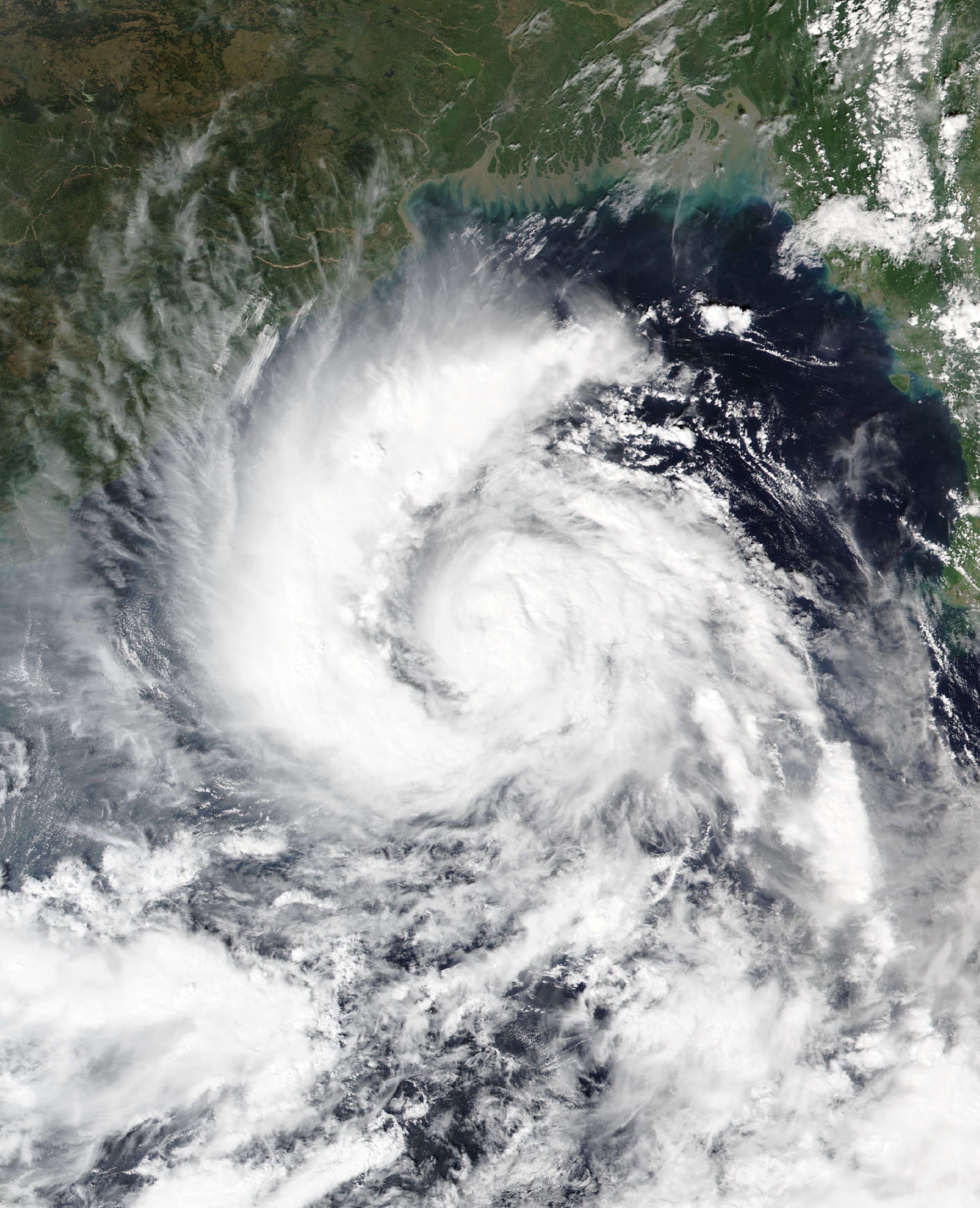
Cyclone Arnab made landfall on India's southeastern coast early on Wednesday, lashing Andhra Pradesh with ferocious winds and torrential rain and knocking out power before beginning to weaken later in the day.
The India Meteorological Department said Arnab came ashore in southeastern Andhra Pradesh as a "very severe cyclonic storm" with sustained winds of 125km/h to 135km/h (78-84mph) and gusts of up to 150km/h (93mph). IMD told AFP the storm made landfall at 07:40 IST at Tundurru, near Bhimavaram, and was expected to weaken into a "deep depression" through Wednesday afternoon.
Parts of Andhra Pradesh and Odisha recorded as much as 30cm of rain, IMD said. IMD had earlier forecast a storm surge of up to 1.5m above the tide level, warning that it could submerge low-lying areas of Andhra Pradesh. Before landfall, the storm system lay 16.0°N, 84.3°E, about 220km (137 miles) south-southeast of Visakhapatnam and 240km (149 miles) east-southeast of Kakinada.
Damage and official response
Trees crashed onto highways and pylons were damaged, cutting power across the coastal belt. Overnight, gales battered trees and rain lashed the port city of Kakinada, close to the heart of the storm, as powerful waves came ashore. By Wednesday afternoon residents were wading through flooded streets that appeared to have suffered limited structural damage, while emergency crews cleared uprooted trees and debris from roads.
Andhra Pradesh Chief Minister Nara Chandrababu Naidu said there had been no reported deaths from the storm, and congratulated government officers who had "worked tirelessly throughout the night". His office said he "expressed satisfaction that no loss of life occurred due to the proactive measures taken".
"We are making every possible effort to minimise the impact of the cyclone ... and restore normalcy at the earliest," Naidu said.
"Thank God, there was not as much damage this time," said businessman Hussain, 43, who uses one name. "The sea is very rough, several trees have fallen, and sheds and hoardings have been damaged."
How many people moved to safety
Around 50,000 people were told to move to safer areas in Andhra Pradesh and another 48,000 in neighbouring Odisha. "Our homes get flooded, and we have to stay in the water," said Rajeshwari, 65, who gave only one name and had been taken to a government-run shelter near Kakinada.
Sadiq, 40, a resident of Kakinada, told AFP the situation had become "very dangerous" on Tuesday night, but early warnings from authorities had helped people prepare. "Many people locked their houses and moved to safer places," he said. One Kakinada district resident described the night to Al Jazeera: "No one knew whose house the water would rush into next or whose home would be submerged."
More than 12 million people live along the storm's projected path, according to Andhra Pradesh's disaster management authority. At least 12 trains were cancelled in eastern India and rail services on 53 routes along the southern coast were suspended for Tuesday and Wednesday, regional railway authorities said.
Region on alert
Arnab formed over the Bay of Bengal, one of the world's main breeding grounds for tropical cyclones, which makes India's eastern coast particularly vulnerable. IMD forecast the system would weaken as it moved inland and north towards the Himalayas.
In Nepal, the disaster authority warned that the remnants could bring heavy rainfall, "a high risk of heavy snowfall, snowstorms and avalanches" and hazardous conditions in high-altitude areas from Thursday through Saturday, and urged tourists to stay away from such terrain. Nepal is still recovering from an Aug 26 flood triggered by a glacial collapse that killed more than 1,400 people; Sri Lanka also issued warnings.
*This is a developing story. Landfall time, wind speeds, rainfall and evacuation totals follow IMD, AFP via Channel NewsAsia, Al Jazeera English and BBC reporting on 28 October 2026 and may be updated as damage assessments continue.*
Sumber: India Meteorological Department; Channel NewsAsia; Al Jazeera English; BBC News








No comments yet. Be the first!