
What the trial found
A new personalised cancer vaccine, given alongside a widely used immunotherapy drug, cut the risk of patients dying or their skin cancer returning by 42% in a major clinical trial.
The researchers involved say the results could mark a turning point in cancer treatment, bringing personalised medicine a step closer. The trial also found that the combination reduced the risk of melanoma — a type of skin cancer — spreading by 38% over two years, compared with immunotherapy alone.
The drugmakers MSD and Moderna say the same approach is already being tested against other tumours, including kidney, bladder and lung cancer.
Independent cancer experts described the results as impressive but said longer-term studies were still needed to establish whether the treatment really helps most patients live longer, on average.
How it works
The approach is aimed at patients who have already had their tumour removed by surgery. In the trial, 1,137 adults were given Keytruda, an established immunotherapy drug that helps the immune system find and attack cancer cells. About two-thirds also received an experimental vaccine; the rest were given a placebo.
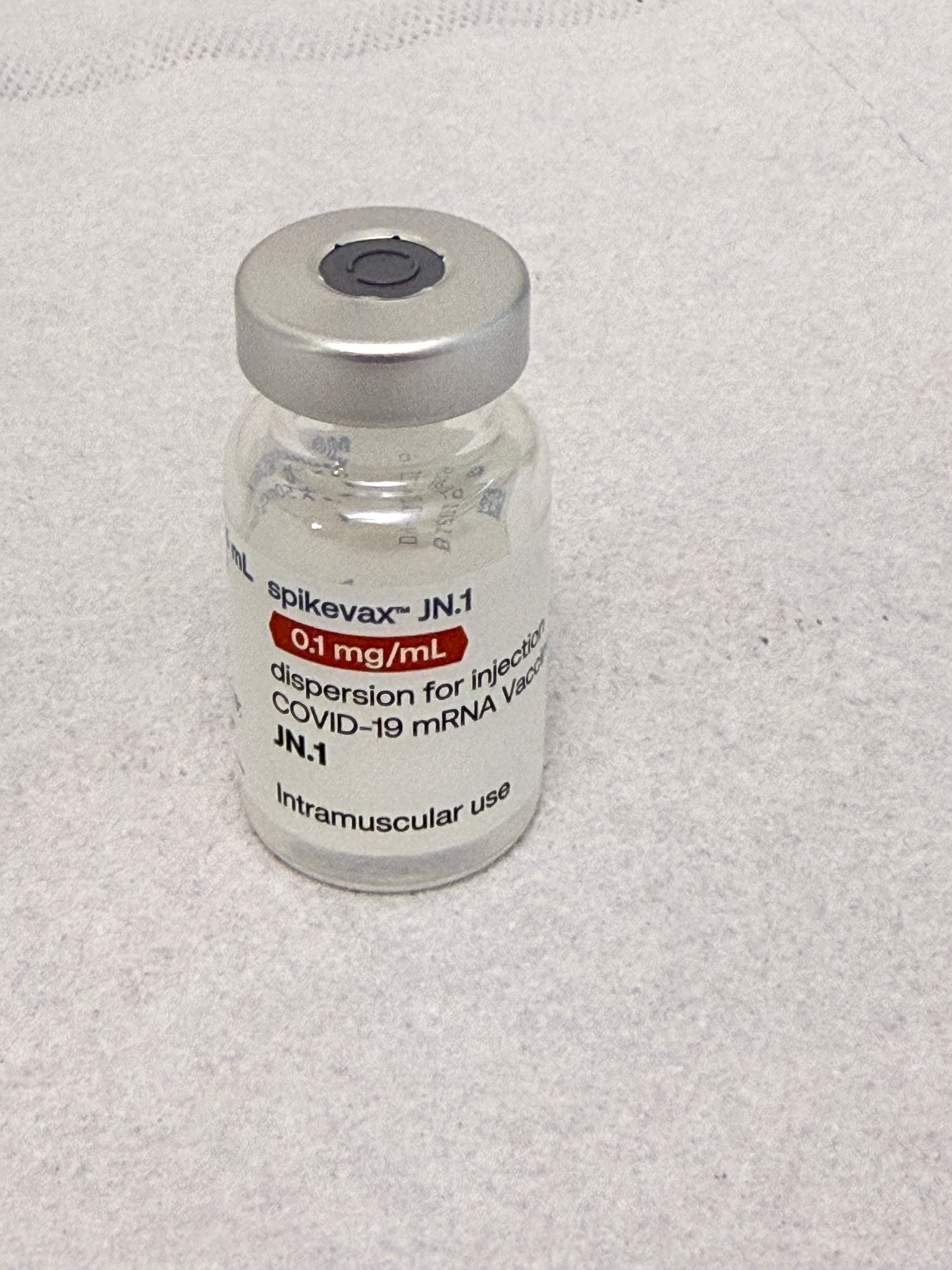
The vaccine, called Intismeran, uses the same mRNA technology as some Covid-19 jabs. It is personalised to each patient, using information from their own tumour to train the immune system to recognise cancer cells and target them if they return.
Two years after starting treatment, patients who received the jab were far less likely to have had melanoma come back or spread across the body.
"Personalisation is the next step up and it's really exciting, it's a fabulous technology," said Prof Pippa Corrie, a consultant medical oncologist who helped run part of the study with patients at Addenbrooke's Hospital in Cambridge. "The question is how much can we really demonstrate its worth and this trial was the first proof of principle."
A patient's view
Prof Corrie worked with patients enrolled in the trial, including 75-year-old Tony Chapman, who was diagnosed with melanoma in 2019. He had the tumour removed from his chest, but a lump later appeared under his arm; he was told the cancer had returned and that he needed a second operation.
He then volunteered for the study but, like all other participants, still does not know whether he received the experimental vaccine or a placebo alongside his immunotherapy.
"This just seemed like a really good example of moving science forward, as well as getting some benefit for yourself, so what's to lose?" Tony said. Three years on he is having checks every six months and remains cancer-free.
Cautious reception
Shares in MSD (known as Merck in the US) and Moderna have surged since the two companies first hinted at the vaccine's success in the summer. Investors sold off stock on Thursday after financial analysts said the results were not quite as strong as those seen in an earlier, much smaller trial.
Both companies said they were now "engaging with authorities", suggesting they could file for approval from medicine regulators as soon as next year. Widespread NHS use will also depend on cost, given that each patient will need their tumour genetically analysed and a personalised vaccine made for them.
The trial will continue so that participants can be monitored — both to see whether the cancer returns over time and to assess whether the drug ultimately helps them live longer.
Professor Alan Melcher of the Institute of Cancer Research in London, who was not involved in the research, described the results as "very impressive".
"It is an important proof of principle for the field, although we shouldn't get ahead of the evidence," he said. "We can't assume from one melanoma trial that the same approach will work across all cancers, and longer follow-up will be important to understand the effect on overall survival."
The full trial results are due to be presented at the European Society of Medical Oncology (ESMO) cancer conference in Madrid on Saturday. They have yet to be published in a peer-reviewed medical journal, where they can be scrutinised by independent experts.
Sumber: BBC News



No comments yet. Be the first!